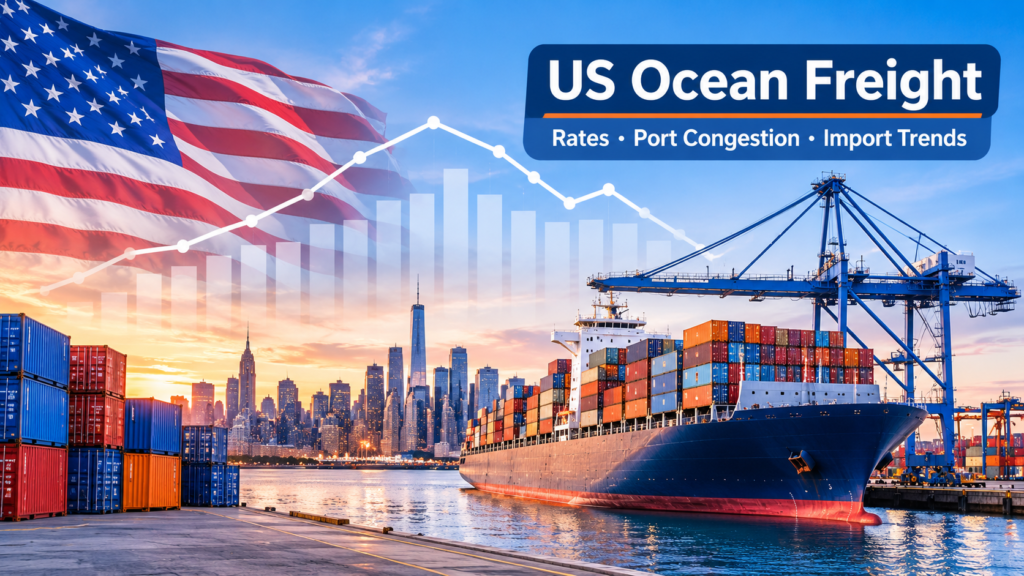
US Ocean Freight is entering a challenging transition as the 2026 peak shipping season winds down. For importers shipping from China to the United States, declining import volumes do not automatically mean cheaper transportation. Elevated freight rates, inland rail delays, and changing trade policies can still affect your shipping budget and delivery schedule.
According to the November 10 Freightos market update, Asia-to-US West Coast spot rates stood at approximately $8,245 per forty-foot equivalent unit (FEU), while East Coast rates reached $9,708 per FEU. Although rates eased slightly, they remained more than twice their levels a year earlier. Understanding these market signals can help you plan shipments, compare freight quotes, and manage inventory more effectively. Honza Logistics supports businesses with international sea freight, customs clearance, warehousing, and door-to-door shipping solutions.
Why US Ocean Freight Rates Remain High
The US ocean freight market faces a combination of softer seasonal demand and persistent logistics constraints. Three factors deserve your attention.
Declining Imports After an Extended Peak Season
The National Retail Federation (NRF) and Hackett Associates reported that US container imports reached approximately 2.37 million TEUs in September 2026, one of the busiest months in the organization’s tracking history.
The November Global Port Tracker projected the following import volumes:
- September: 2.37 million TEUs.
- October: 2.26 million TEUs.
- November: 2.05 million TEUs.
- December: 2.03 million TEUs.
These figures indicate a gradual slowdown rather than an immediate collapse in demand. Earlier shipments ahead of anticipated tariff changes and continued consumer spending helped extend the peak season.
Port Congestion and Inland Rail Delays
Lower vessel arrivals do not necessarily clear existing congestion. Containers discharged at ports such as Los Angeles and Long Beach may still wait for rail transfers, trucking appointments, or inland delivery.
For your business, these delays can increase inventory holding costs and complicate warehouse scheduling. When requesting a shipping quote, consider the entire journey instead of evaluating ocean transit alone.
Trade Policy and Port Fee Uncertainty
On November 9, 2026, China and the United States announced extensions of the suspension of specified port fee measures through January 10, 2027. This provides temporary relief from those particular policy-related cost pressures, but it does not eliminate broader trade uncertainty.
Importers should continue monitoring tariff developments, port operations, and carrier announcements before committing to shipping schedules.
US Ocean Freight Rates: West Coast vs. East Coast
The following figures summarize the November 10 market snapshot reported by Freightos. They are indicative spot-market benchmarks, not guaranteed booking prices.
| Shipping lane | Approx. spot rate per FEU | Weekly change |
|---|---|---|
| Asia to US West Coast | $8,245 | -1% |
| Asia to US East Coast | $9,708 | -2% |
| Asia to Northern Europe | $3,422 | -5% |
| Asia to Mediterranean | $4,324 | -1% |
For shipments from China to the United States, the West Coast benchmark is lower than the East Coast benchmark. However, the cheapest ocean rate may not produce the lowest total landed cost.
You should also compare inland transportation, destination handling, customs clearance, and delivery requirements. For example, a shipment arriving at Los Angeles may require substantial rail or trucking expenses to reach an East Coast warehouse. A different routing option could offer better overall value, depending on the final destination and delivery deadline.
How to Plan China-to-USA Sea Freight During Market Uncertainty
You can manage shipping risks by following a structured booking process.
- Confirm your cargo requirements. Identify the product type, shipment dimensions, gross weight, cargo-ready date, and final delivery address.
- Compare FCL and LCL options. Full container load (FCL) shipping may suit larger shipments, while less than container load (LCL) can help smaller businesses consolidate cargo with other shipments.
- Request an itemized freight quote. Ask for the ocean freight rate, applicable surcharges, origin and destination charges, customs clearance fees, and inland delivery costs.
- Check schedules and available capacity. Confirm estimated transit time, sailing frequency, booking deadlines, and any potential port or rail delays.
- Prepare customs documentation. Verify commercial invoices, packing lists, product descriptions, and any permits or additional documents required for your cargo.
- Track the shipment through delivery. Maintain communication with your logistics provider so you can respond promptly to delays or changes in the estimated arrival date.
This process helps you compare quotes on a consistent basis and avoid decisions based solely on headline freight rates.
How Honza Logistics Supports US Ocean Freight Shipments
Honza Logistics is an international logistics provider established in Shenzhen in 2013, with branches in several Chinese cities, including Shanghai, Ningbo, Qingdao, Tianjin, Xiamen, and Changsha.
For businesses shipping from China to the United States, its services include:
- Ocean freight: FCL and LCL shipping options for different cargo volumes.
- Customs clearance: Import and export clearance coordination, subject to applicable regulations and cargo requirements.
- Warehousing and consolidation: Cargo collection, storage, labeling, inspection, and consolidation services.
- Door-to-door transportation: Coordination of ocean shipping, customs clearance, and final delivery.
- Amazon FBA shipping: Air and sea freight options for sellers supplying Amazon fulfillment centers.
Honza Logistics also identifies itself as a Non-Vessel Operating Common Carrier (NVOCC) registered with China’s Ministry of Transport. Its established service network can help you coordinate the different stages of an international shipment.
When evaluating a logistics provider, ask for a route-specific quotation, a clear breakdown of included services, and realistic delivery estimates rather than relying on general market averages.
FAQ
What affects US ocean freight rates?
Freight rates depend on cargo demand, available vessel capacity, carrier pricing decisions, fuel-related costs, port conditions, and seasonal shipping patterns. Customs duties and inland transportation can also affect your total shipping budget.
Is China-to-USA sea freight cheaper on the West Coast?
The West Coast spot benchmark was lower than the East Coast benchmark in the November 10, 2026, market snapshot. However, your actual cost depends on the destination, container size, inland delivery requirements, and applicable surcharges.
How can you reduce China-to-USA shipping costs?
Compare FCL and LCL options, consolidate cargo when practical, book with sufficient lead time, and request itemized quotations from logistics providers. Evaluating the total delivered cost helps you identify savings without overlooking customs or destination charges.
Conclusion
US Ocean Freight remains expensive despite signs that the 2026 peak season is easing. Lower import volumes may gradually relieve pressure, but elevated spot rates, inland transportation delays, and trade policy uncertainty still require careful planning. By comparing total shipping costs, checking capacity, and preparing documentation early, you can make better-informed decisions about China-to-USA container shipping.
Honza Logistics provides ocean freight, FCL/LCL, customs clearance, warehousing, and door-to-door transportation services to help businesses coordinate international shipments. Contact Honza Logistics to request a customized quotation based on your cargo details, destination, and preferred shipping schedule.